- This topic has 17 voices and 36 replies.
-
AuthorPosts
-
February 5, 2003 at 4:32 pm #581
In a five week period,, between December 16, 2002 and February 4th 2003, I heard from 18 different people with the Blackfoot ID in their families. Of them, 50% had names which occur among families believed or known to be Saponi (Eastern Siouan) descended. Eighty-one percent had surnames associated with VA/NC families believed or known to be Indian descended. Thirty one percent named these ancestors’ place of origin as Virginia or NC. Ninety-three percent were from states frequently mentioned by Saponi researchers as migration paths for Saponi descendants, WV, TN, IN, SC, VA, NC, SC, Al MS, PA, IL.
The names reported during this six week period that also occur among families believed to be Saponi are:
Day
Williams
Jones
Scott
Lane
Williams
White
Matthews
Anderson
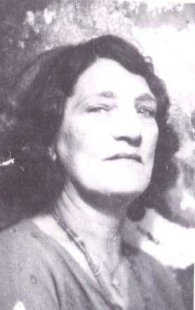
Day Family of Ohio
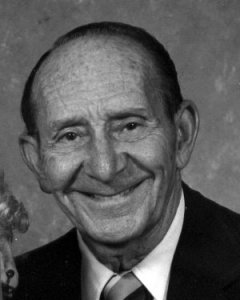
Jones/Smith Family of Indiana
The other names reported during this period that are found among NC/VA families believed to be Indian descended are:
Minor
Critchfield
Williamson
Smith
Jennings
Thompson
Moss
Lee
Turner
I’ll try to keep posting this on a monthly basis. I want you all to see what I’m seeing. Think about it. In January, 24 people found the site after searching on some variation of “Blackfoot” In five week’s time, including January, I heard from 18 of those people. Half of them had names believed to be Saponi! If this is just some tribal name people were glomming onto because it was a household word in the 1890s, why would, 50 percent of the time, only people with these names glom onto it? Does that make any kind of sense? Is there any statistical probability to that?
This is a big country, Wild Bill got to all corners of it, I imagine. Why would 93 percent of the people who “glommed” onto the Blackfoot ID be from states other Saponi researchers constantly cite as involved in the Saponi migration?
By the same token, there are millions of surnames in this country. The English ones may be common, but what are the odds that the combination of names I keep hearing about from Blackfoot ID’d families just happen to also be on the list I use of SE Indian families, to the tune of 81%?
I’d be willing show the emails I’ve received during this period to someone interested in corroborating these figures. Or perhaps someone else would like to receive the same emails for a period. That would be easy enough to arrange.
February 5, 2003 at 4:32 pm #7061Linda, I might take you up on that. And thanks for these comments. 🙂
vance
February 5, 2003 at 4:32 pm #7063You think so? Let me know, I’ll just add your email address to the “To” line people send their questions to.
February 5, 2003 at 4:32 pm #7073So, what do you all think? How convincing does this data seem?
I know that all we can claim is that these are “believed to be Saponi” names, but I find the coinciding of names to strengthen both. There may be less than 10 names that are documentable to a tribal person, but there are a whole lot more than that being used among state recognized groups, that are being acceptable currently and socially. The fact that a large group of people with family histories of Indian descent also report the same batch of names lends credence to those names being accurate.
Do my arguments in the first post seem convincing? Is there any other way to explain this data?
February 5, 2003 at 4:32 pm #7075Since I’ve put this out there, I’ve been worrying about what the weaknesses were with this data, and I’ve thought of at least three possible ways the data is skewed. First, is the one I already mentioned in the article, the people coming to me have already read the article and are filtered by it — I hear from people who are from the areas mentioned since the article effectively encourages them.
That wouldn’t account for why there’s such coincidence of names, but that might be accounted for by the “quantum” effect. I hope I’ll hear from people with those names, therefore I do. (Like the quantum physicists who expected a quark to go left observed it going left, those who expected it to go right, found it going right — somehow the energy of their thought processes influenced the result.)
The third possibility is one I’m always teasing about, that my Ancestors are great internet hackers, constantly stuffing my inbox with uncanny coincidences. I’m hearing from the people THEY want me to hear from. That would also account for why I’m often hearing from people with the same last names/locations, etc., who likely are related, IN THE SAME WEEK.
SO . . . to create a control group, a second study would have to be done, combing the internet for people who have posted questions about Blackfoot heritage on other boards where this kind of energy doesn’t exist. My intiial impression on this is that the incidence of ‘Saponi’ surnames would be lower, but the origin locations would remain the same. In all this, I HARDLY EVER HEAR ABOUT NEW ENGLAND. I’m sure Wild Bill did more venues there than anywhere, and it’s highly populated, so if the theory about people just glomming onto the name once it became a household word is true, you would expect an equal showing from there, but those state names rarely ever come up as points of family origin for these “Blackfoot” lines.
February 5, 2003 at 4:32 pm #7078Maybe we can do a similiar study for Cherokee names.
Afterall, that designation would be the would be our first place winner, Blackfoot being our second.
I think the probability lies within these people being of mixed race, coming from a region known for exodus of colored people. The Indian conponent maybe Saponi, maybe Cheraw, maybe Monacan or Nottoway – unknown other than “indian” to their descendants. The popular Indian names fill in gaps for the unknown origin. The likely hood that these people come from an area with heavy trafic, missing indian groups (a region called the mulattoe belt), and that they may be related to the missing people from this region is high.
It would be interesting to see what the figures look like for individuals of the same current locality who are searching for Cherokee ancestors, or what percentage of people settled those areas (regardless of race) originated from VA/NC, or what the names and numbers look like for “blacks” in new england who’ve a tradition of being indian from the south (blackfoot or otherwise).
food for thought.
February 5, 2003 at 4:32 pm #7079I hear from mostly “white” Indian descendants, it seems, many of whom left the upper south before Blackfoot was a popular name, so I can’t see how to quantify any data around those assumptions.
If the tribal origin could be so many different things, why is there such a preponderance of names that are always coming up in discussions of families felt to be Saponi?
February 5, 2003 at 4:32 pm #7080“It would be interesting to see what the figures look like for individuals of the same current locality who are searching for Cherokee ancestors, or what percentage of people settled those areas (regardless of race) originated from VA/NC, or what the names and numbers look like for “blacks” in new england who’ve a tradition of being indian from the south (blackfoot or otherwise).”
Im not sure people are searching for Saponnys. they may be searching for blackfoot or blackfeet and find saponi because of this search. maybe the word is out on the net that blackfoot may meen saponi?
All im saying is people may be related to each other and to indians from this region. they may say they’re blackfoot or maybe cherokee or nothing but indian, or white or whatever. the probalbility that people who settled most of the US came from VA/NC at some point is very high regardless of race. how do we deciminate ones from the other? what about the exodus cherokees all over the country? i think every state has at least one tribe. I just think blackfoot is a good ID, and that maybe some of these people fit the association of Saponi or something from a related group nearby.
February 5, 2003 at 4:32 pm #7082I have a subscription to a database that keeps track of all the search terms people use in the world in a two month period. About 9 people in the world search on the words “Saponi.” About 800 or 900 search on variations of the words “Blackfoot.”
If you look at my logs, most of the people who come to the site, do so because they searched on the terms “Blackfoot.” My site comes up on the first page of the engines for that word. They either come in at the main page, or straight to the page with the “Other Blackfoot” article. I get a lot of people reading that, many all the way through. I then hear from some of them, who write me directly.
If you search Google on the words “blackfoot indian tribe” my site comes up first, with the following blurb Google grabbed onto for whatever reason,
The Other Blackfoot Indian Tribe
… Let me first deal chronologically with what’s known about the village or tribe,
the Sissipaha, which I believe translates as “Blackfoot.” The Sissipaha …
So in this case, there’s no filtering of folks, anybody looking for any kind of information on the Blackfoot enters. I don’t seem to be coming up for other variations at the moment. Once they read the article, I’m sure it, in effect, filters down to the people who have eastern, or southeastern roots, and that’s who I’ll tend to hear from. What constantly amazes me, though, is that when I hear the names they have in their families, and look them up on the list I have of names associated with southeastern Indian families, the names cluster by 50% around those felt to be Saponi, aka Eastern Siouan. The further back people can trace their families, the higher the correspondence of names, also.
Is there any way you can quantify how many “black” Indian descendants you’ve run across on the eastern seaboard who said they were Blackfoot? Where on the eastern seaboard? The only ones I’ve heard from fit this pattern the same as the “white” Indian descendants. One even has the story in her family that they’re “S’poni Blackfoot.” Nonetheless, the majority with the Blackfoot ID seem to be presently midwestern, and my impression is, that they’re white identified now, though it could just be that the subject is not coming up. I haven’t quantified that, but that would be interesting to look at.
Some of these descendants are offended by the inference that there is anything but a coincidence between the words black and blackfoot. Not because they don’t want the racial designation, but because it just runs over their own family history. Like the lady who’s family is from the Big Sandy in Ohio, who was shot down on a list by someone who was very adamant there’s no such thing as eastern “Blackfoot.” “Puleaze,” she moaned, ‘these are just phony family stories from people who grabbed onto something trendy, that sounded better than being called black.”
My friend’s family were very isolated, Appalachian people who carried the tradition long before it was a household word, who’ve never had to defend themselves from “accusations” that they were “black,” and who have never in all their history been remotely interested in anything “trendy.” Their issue was more one of whether they trusted the outside world at all.
By the way, I’m going to have to take those names off the front page, since that really would skew the results.
February 5, 2003 at 4:32 pm #7083Itconani & Linda & others —
Itconani —
Hope all is well with yall.
What I am sayin’ below could be done for Cherokee, or for any group for that matter, as well as Saponi.
I hadn’t been here for a few days.
howdy —
Linda, when you do a search for “Virginia Indians”, I think your sight also comes up pretty close to the top of the list. I know that’s how I first found this web site a year or 2 ago. All I had to go on way back then was old census records sayin my g-g-g-grandpa (John Richey 1797-1861) was born in Virginia, and knew they were from what dad said Indian/Irish mixed.
[Dad’s Brown’s he said were mixed Cherokee and we eventually traced them back to Brown’s Valley in NE Al about 1818 and some of them to around Holston Island area a generation or two earlier.]
So you could theoreticallly, like me, have never heard the word “Blackfoot” and get to your website by knowin’ your ancestors were Virginia Indians and doin a search for it.
Also you need a control group — data about surnames from the region in the historic period when Saponi lived there. With this data collected, call it a Random Sample Group, I could run some statistical tests to determine if the E-mail Group of surnames of your people are a random group of descendants from this area — and they should be. You ALSO need to use your list of known Saponi surnames.
You need to hypothecize that your Email Group is significantly statistically closer to the Known Saponi surname list than the general public sample in the Control Group. Such statistical analysis exists and can be determined. This would not prove any individual is Saponi Indian, but it would constitute “proof” — as much as you can probably ever get — that your E-mail Sample Group as a whole DOES contain Saponi blood.
Now the hard part is connectin YOUR ancestors surnames (if they are not on the rolls) with known Indian families with known surnames.
I can run statistical analysis of data if someone knows how to collect it. The hard part is knowin how to insure the control data is random.
vance
February 5, 2003 at 4:32 pm #7084I have met a small number of mixed race folks from the Granville County, NC area, Pettiford descendants, as I recall, who said they had been called “Blackfoot Indians” by local whites. Their interpretation was that it implied African ancestry, which indeed, they acknowledged having, in addition to Indian and white.
Just to further muddy the water…..
February 5, 2003 at 4:32 pm #7085Vance, I do have hard data on what search terms people have used to find the site. I don’t remember seeing ‘Virginia Indians’ much, though I wasn’t looking specifically for it. I may be at the top for those terms, but if not many people are searching on it, it doesn’t matter much. I do get a very steady amount of traffic on variations of Blackfoot, though.. Big demand! 😎 I guess if I hadn’t happened to have that word on the site, I wouldn’t have much outside traffic at all.
Here are the search terms people came in on in December
5 blackfoot indian
5 blackfoot indian tribe
3 saponitown
2 blackfoot
2 blackfoot tribe
2 famous people from mississippi indian tribe
2 saponi town blackfoot
1 africansandindians
1 blackfoot indians
1 blackfoot indians ohio
1 blackfoot indians texas
1 blackfoot town saponi
1 blackfoot tribe ohio
1 indians staunton virginia
1 information on blackfoot indians
1 iroquois history in virginia
1 maroon colonies haiti
1 natchez living with cherokee
1 nc indians
1 nottoway falls
Forest, I haven’t heard before of people who were being called that by others. All the people I’ve talked to have had that ID in their families for a long time. That’s interesting.
I know you’re from Maryland. Had you ever heard of Blackfoot Town, MD (now known as Dagsbury, DE)? That was the name of the town between 1740 and 1780.
February 5, 2003 at 4:32 pm #7088deleted
February 5, 2003 at 4:32 pm #7091I’ve been looking at the Executive Journals of the Colonial Council and kept my eye out for any mention of Cherokee in Virginia. Between 1699 to 1739, the only thing I saw that might signify something was a request from the Cherokee to move some people into southeastern Virginia to enhance their trading capabilities. The governor advised them not to do so, since there were so many raids from the Five Nations at the time.
So, that might provide a motivation, but would it apply to later on, after the tribes we have record of had been neutralized, defined out of existence, transported, dispersed, whatever? In say, 1760, would the Cherokee have been interested in moving into southeastern Virginia, or down into the flatland of NC in enough numbers to be leaving all these descendants?
Could the need for cash have risen enough that people needed to go down into the flatlands for work? Wouldn’t there be record in people’s ledgers of having employed such people?
February 5, 2003 at 4:32 pm #7093i dont think there are anyway “historic” cherokees doing anything in eastern va or nc except for raiding if at all. some visit on diplomacy, some en route to other locations. later duirng the late 1800s and early 20th century, some cherokees move east for work and for schooling. i know that from my own experience (my mom went to school with a few Qualla cherokees in grade school) and a few local histories that are very well documented (as in still living enrolled members recounting their parents / grandparents plights)
i know the struggle for searching history with “cherokee” overtones. my grandfather was not a researcher of merit, but did dable. with the cherokee matra in hand, he looked up in down in records in raliegh for our relations in the civil war and within enrollment docs. upon finding similiar named individuals in both areas he felt confident of his Cherokee ID. however, these folks were not related directly, maybe cousins at best (my own research) and were definately not cherokee living east of present I-95. So grandad died a cherokee at heart – but not one by record. some people see what they want – others feel okay about “what theyve been told” So i stand asking, who are these people of mixed ancestory (mulatoes) with tales of being indian from this region? more digging, some luck, and alot of hours.
on rose’s surry:
originally the south james had these folks in order from hopwell to suffolk:
Appamatucks, Weyanokes, Quiyocohonnacks, Werroskoiacs, and nansemonds(forgive spelling, notes not in hand). they pretty much come down in county order: hopwell – Appamattox; prince george – Weyanokes; surry – quiocohannock; isle of wight – weroskoyacks; suffolk – nancemond.
Now these groups didnt always fall in this vain, but pretty much (weyanokes were also in charles city and moved alot later) but this is how they looked by 1610. Weyanokes stick around for along time in the records in both VA & NC, quiyocohonnacks are not mentioned after 1635ish and neither are the weroskoyacks by 1644. that leaves pretty much the nancemond, and the weyanokes by 1700 (others probably consolidated)
The weyanokes travel and split alot during this time, with pettitons to the governor for land, and shacking up or quarreling with chowanokes, nancemonds, nottoways (and presumebly meherrin), and tuscaroras, and invariably – saponis at different points. Algonquian speakers – allied with chowanokes – but by 1700 most spoke english really (bilingual if not more) well. Ive seen arguments that make both nottoway and meherrin sioun speakers – and of course saponi as siouns. i think banding at this point is out of defenswe and strength in numbers, not lingiustics. indians were severely marginilized by this point in eastern va. they were monitored, and required to check in at several points, recieve coats of color as badges before moving forward into va. they had huge pop deciamtion, large land loss, etc all the usual biz we all know. northhampton maybe remnants of all these peoples.
-
AuthorPosts


- You must be logged in to reply to this topic.
