- This topic has 3 voices and 5 replies.
-
AuthorPosts
-
May 14, 2004 at 3:04 pm #964
Hi
I’m new to this web site and would appreciate any help someone could give me. I have been doing genealogy for a long time.
My ancestor is Winnie Rutherford she was born 1775 we believe in Va. based on one of her grandchildren saying they were going back where there people came from and they went to Va. Winnie married Charles Dodd sometimes spelled Dood. Winnie and Charles lived in Ga for a while and then moved to Tuscaloosa Co Al then to Jefferson Co. After Charles passes Winnie is found living in Jefferson Co Al with I think her granddaughter who has married into the White family
Their daughter Sarah married Ancel Fortner (Faulkner)
Their daughter Permelia Ellender Fortner b.1837 married William Riley Thomas
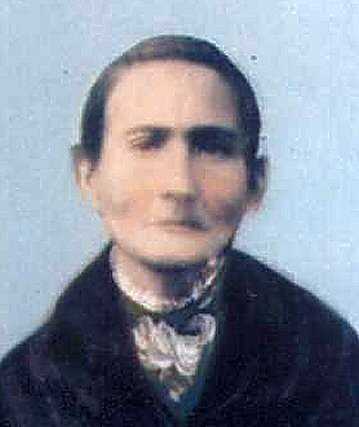
We had always been told we were Cherokee. I contacted Ellen’s youngest daughters family yesterday and they said they were told we were Blackfeet so I searched for Va Blackfeet and found ya’ll.
I have more specific information, siblings names etc.I will just have to dig it out
Thank you for any help
Jenny
May 14, 2004 at 3:04 pm #9700Welcome to the forum, Jenny, and welcome home.
Is the picture of Ellen?
Do you have the 1850 Jefferson Co., Ala census info showing a “Winny Dood” as 75 yrs old (b.abt.1775) and born in “Va.” ?
She was living at an Enoch WADKINS, 21, b.Ala., (“Watkins” on the 1860 census). They have numerous neighbors with surnames associiated with people on this forum.
Do you have a JONES and/or SHACKLEFORD line that connects to your DODD/RUTHERFORD lines?
I believe Linda, on this forum, has a “Retherford” line that is Rutherford on some records.
Bill
May 14, 2004 at 3:04 pm #9701Hi Bill,
Thank you for the welcome and the information. Several of us have been searching for a long time. I will look at the Retherford info, I haven’t yet. Are there any specific books that any of you would suggest ?
I know quite a bit about SE Cherokee culture, is ours similar?
Jenny
May 14, 2004 at 3:04 pm #9702I’ll let Linda Carter tackle the specific question, but generally speaking, Eastern Woodland cultures had a lot in common.
May 14, 2004 at 3:04 pm #9703Hi Bill
I realized I forgot to tell you that the photo is Winnie’s granddaughter, my great great grandmother, Ellen Fortner Thomas.
I read the info on the Retherford connection. Ellen’s husband was William Riley THomas . We also have a John Henry Thomas in our line.
My great grandfather and Winnie’s greatgrandson fit the description of the men he was tall and large boned but had fine features. Is there anywhere I can see pictures of the men and women?
Jenny
May 14, 2004 at 3:04 pm #9705I believe the Blackfoot identified in our families were Siouan. The Cherokee are Iroquoian, so they would have had completely different languages and cultural ties, though they lived near to one another, at times they warred, at times they traded peaceably.
I was just researching the explorations into the Piedmont in the mid 17th century, and Bacon Rebellion, which eviscerated Siouan control of their own territory. There’s an interesting account about how the Tomahitans, who some feel were the Cherokee, were divided as to whether or not to protect the Siouan (in this case the Occoneechee) from the wrath of the English. One Occoneechee had allegedly killed an English explorer.
His companian’s life was in danger, since many of the Tomahitan wanted to kill him to silence him. At least one chief and his men felt diffferently and protected the Englishman, Gabriel Arthur, who eventually did return to the English and report on the murder. Three years later the Occoneechee were deceived into taking Bacon’s army onto their island, only to be massacred by them.
People have often reported their families as Blackfoot Cherokee. Personally, I think that this represents a merging or intermarriage of people from these two tribes. What I’ve seen is that this happened as both groups were pushed into Appalachia. My impression is that this happened when both would have been fairly Anglicized, they probably had the English language in common by then, and were probably losing cultural details that would have differentiated them.
-
AuthorPosts


- You must be logged in to reply to this topic.
