- This topic has 12 voices and 55 replies.
-
AuthorPosts
-
January 15, 2002 at 6:40 am #510
i heard someone mention an interest in producing capes AKA mantles of feathers.
heres a chance to communicate on a project of importance.
Ive have some photos of produced local capes.
one is recreation using mostly turkey tail and wings feathers. (1980s)
the other is done as a vest with body fluff only. (1930s)
Also, if my memory serves me – i believe a very nice cape was made by a local woman in virginia and gifted to a local chief. i could have sworn it was either the late Leonard Adkins (chickahominy) or John Jeffries (Ocaneechi). i could look into that, its been 10yrs since that one was made.
now, ive got good refernce and access to feather weaving work from Peru. this is a very good model to observe, some basics dont change. and if by chance there was an isolate weaving style here, we dont know about it – rich soil has taken all, with no known extant examples.
so ive got alot of turkey feathers saved for this undertaking – and ive chosen a botanical for making the “web” or frame. now the question is “how insane am i?” do i want o go with small feathers for all, or just for upper and do tail / wing for lower? thoughts or comments?
And….
whos knows about raccoon mantles?
“….all tails hanging by…” (1612)
January 15, 2002 at 6:40 am #6649I’ve wondered myself how to plan such a large garment. It would seem that to look right, the cape would need to be made of body feathers, and pretty uniformly sized and colored ones at that. Turkey’s a good choice, since there were turkeys used then, and they’re commonly available here. I would think that the tail feathers might work along the bottom edge, but even then they’d need to be just certain ones — the central tail feathers that are very symmetrical.
I’ve wondered how densely to place these feathers. To see some of the beautiful patterns that feathers make you’d need to put them back onto the netting as closely as they were on the bird. That would take an awful lot of birds. But perhaps this is not necessary.
I would think cording from dogbane would be good for making the mesh. We looked this fall, but never did find a supply of it. Sun offered to grow some. I bet it would grow down by the pond. It seems to be what William Byrd was referring to in his History of the Line. It seems he was near Mecklenburg County, VA, and someone showed him the stalk of a plant that the ladies used to make the little skirts they wore around their waists. I was very happy to find this reference, since at the time I was being bombarded by “expert” re-enactors who were telling me our ladies wouldn’t have known how to weave. Humph!
January 15, 2002 at 6:40 am #6650John Jeffries was gifted a feather cape. I don’t recall who made it however.
January 15, 2002 at 6:40 am #6651Okay! Now lets look to some old pic’s from the Natchez they were sketched wearing one, (probably in swanton’s book) also Speck is said to have kearned from the Rappahanocks how to do this,but on a base of cloth. The netting could be done using any arch’l material lots of webbing or netting examples around. raccoon tail mantles I’m not so sure about but they are found illustrated on some shell work. Some of these old mantles were said to have feathers on the inside aswell, I personally would “grade”the feathers for size length and color and try to use smaller at the top,? what would one use for a top band? Look for ” lost and Found Traditions in American Indian art’ and there is a spiner weaver in the ne, who can help with the cording supplies. I’ll try and locate her name. Best to all, Tom.
January 15, 2002 at 6:40 am #6652good info folks!
on the mantles: ive got a good design for weaving feathers in a certain frame weave to make tight small feather layers.
however, i believe that it might not be necesary to stay with the small body feathers. the cape wraps around the body and has definate right and left sides (veins) as well as a real body to it. early writers described this as appropriate winter wear for the topless Virginians. so we need layers and length. White’s cape comes down below waist as does the longer natchez. i would be interested to see that one at Blackfeathers. I cant remember the name of the girl who made it though – she lived in hampton or newport news VA.
the raccoon mantle is fairly simple, but in need of alot of stitching and a good handful of coon pelts. one of these stands at jamestown. Wahunsonacok was described as having one made of pelts sewn together, for a very fine presentation. however, i am not aware of anyone who has produced one of these besides the museum copy. I guess i dont have to mention the “powhatan mantle” in the ashmolean. thats massive and loaded with shells. I do have one other interpretation from VA beach area @ contact period site. its not published, so any one interested in shell / deer hide production let me know. this one has a matching hoody.
January 15, 2002 at 6:40 am #6653If you get going on that project and would like a little help/company at some point, let me know.
January 15, 2002 at 6:40 am #6654If either of you can scan any pictures, send them to me as an attachment and I will upload them here.
January 15, 2002 at 6:40 am #6655Hello All, yes I would like to see the other mantle that you mention, the ‘hoody” sounds simalar to the Saura womans cape. Re the feather mantles, have you heard about the ocellated turkey’s from Mexico that have some sky blue blotches on thier breast feathers? I have a diagram of a “mountain Cherokee” upright loom, would you like a copy of this anyone? Also I have recieved the info from Britian, “Tradescant Rarities” and there is some good stuff there, unfortunatly the shirt is from farther north than Va. but there still is some good references to a mantle that was published once in the 1800s, I’ll check into that and get to it for this project. best to All,Tom.
January 15, 2002 at 6:40 am #6656good documents from britain are always a pleasure. also interseted in your “mountain cherokee” loom. the other mantle – ill have to get copy of documents from DHR, they should have them. this mantle was from the “king of great neck” in the Great Neck area Virginia Beach, ie Chesapiok. The only diagram i have seen on this is at the Marine Science museum in Vabeach where some of the collection is housed. so DHR should have a copy, since it was a virginia dig.
January 15, 2002 at 6:40 am #6657Hello All, for good examples of netting check Prehistoric Plies by Sandra Clemens Scholtz, the examples are from the Ozark dry caves but still usable for this topic. Buck I’ll get into the article from Britian on a topic setting that way we can look at it and others may want to save it for a project for thier own making, Linda can we do some illustrations there? The natchez capes were fist painted by a frenchman, I’ll check and send the info. on to you Linda. Best to All Tom.
January 15, 2002 at 6:40 am #6658Sorry to take so long with this. I just got back in town, big weekend. Here’s photos that itconani sent me to upload:

Mattaponi mantle

Monacan vessel

Monacan vessel #2

Powhatan mantle
[This message has been edited by Linda (edited 01-21-2002).]
January 15, 2002 at 6:40 am #6659Hello All, very nice to see some pic’s up here, I’ll have to try and get some of those images that I’ve been refering to and send them on to you. The Natchez capes were painted or sketched by Le Page du Pratz in the early 1700s, the other picture? is in Robert beverley’s “History and Present State of Va. an image there said to be only published once so far? I have a very bad xerox of a Pamunkey cape probably in the frank Speck collections somewhere, I at one time I used to exchange letters with the late Claude Medford jr. the Choctaw anth’ and proffesional artist from La. This week I’ll get into the local Univ. library to do some looking and send what I get. Best to all, Tom
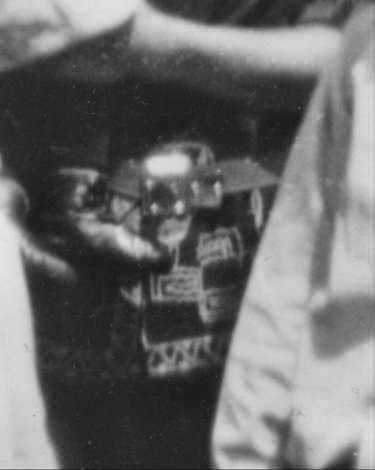
January 15, 2002 at 6:40 am #6660I’m putting Tom’s photo up here as well as on “Family Lore”, it may be out of context there. Does anybody recognize this pattern?
 January 15, 2002 at 6:40 am #6661
Hello all, this next posting is from”The virginia Indians in the 17th Century” by Charles C. Willoghby; American Anthropology; 9- 1907.
“Likewise her mayd fetcht hera mantell which they call “pattawas’ which is like a side cloake, made of blew feathers so artefically and thick sowed togither thatis seemed like a deep purple satteen, and is very smooth and sleek”.
So,, what do y’all think this one is made of? I can tell you that I have done a little research into the netting methods in the south and have read on one type having knots 4mm apart!
Please consider the current concept of netting!?
Best to all Tom.
January 15, 2002 at 6:40 am #6662Hello Everyone!
Recently I picked up a copy of American Indian Art Magazine Spring 2002.
If some of you are still interested in making feather mantles I’d very much suggest that you look into this, at first glance I would have called the materials shown there from Turkey Mountain traders as “Oceanic” but apparently it is not.
I think that this needs some very serious considerartion! Tom.
-
AuthorPosts


- You must be logged in to reply to this topic.
