
- This topic has 0 replies, 1 voice, and was last updated 8 years, 4 months ago by
 MarcSnelling.
-
AuthorPosts
-
April 10, 2018 at 9:18 pm #48798
Proto-Dakotan Swadesh word #45
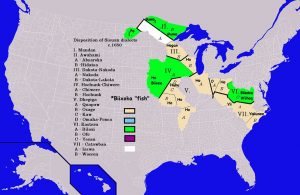
*Bixoka, fish.This one is pretty easy. The green areas on the map indicate evidence of initial labial b- ,for example Mandan /Po/ <*Peho <*Piiho <*Biiho <*Biixoq <*Biixoka. The Dakota form /Hogan/ and the Woccon word /Yakunee/ may preserve an original final nasal, eg *Bixokan, but evidence is slight.
Both Yesan terms /Biisoka/ and /Wiihoq/ would seem to go back to variants of the same original, *Biixoka.
Rankin’s version of the Proto-Siouan word for ‘fish’ is *Wiho. He lists most of these words, but misses two of the most crucial forms, Yesan /Biisoka/ and Chiwere /Biixee/.
William Meuse
Proto-Dakotan Swadesh word #46
*Wajinkedetska, bird.Languages #6-11 all show the first part, *Wajinke-, while in #4,5, and 12-16 we also see various signs of *–detska .
1 WOCCON ?
2 CATAWBA /Kuchin/ <?
3 YESAN /Mayiink/<*Wayiink <*Wazhink <*Wazhinka <*Wajinka <*Wajinkedetska
4 OFO /Teeska/<*Kudeska <*Kedeska <*Jinkedeska <*Wajinkedetska
5 BILOXI /Kudska/<*Kudeska ^
6 QUAPAW /Wazhinka/^
7 OMAHA /Wazhinga/<*Wazhinka ^
8 KAW /Wazhinga/ ^
9 OSAGE /Wazhinga/ ^
10 HOCHAK /Wenink/<*Wanyinke <*Wazhinka ^
11 CHIWERE /Wayiinye/<*Wanyinke ^
12 MANDAN /Manreksuk/<*Wandeksuk <*Wandetska <*Wajinkedetska
13 DAKOTA /Ziitkadan/<*Ziitkada <*Zhinkada <*Jinkedeska ^
14 NAKODA /Ziitkana/<*Ziitkada ^
15 HIDATSA /Tsakaka/<*Jakaka <*Jiikaka <*Jinkedeska ^
16 CROW /Dakaka/<*Jakaka ^Rankin takes #4 & 5 to Proto-Biloxi-Ofo *Reska, but no further. He says #12 is from PS *Awanre ‘bird’, while #3 and 6-11 are from *Awanre plus *-yinke ‘young’.
William Meuse
Proto-Dakotan Swadesh word #47
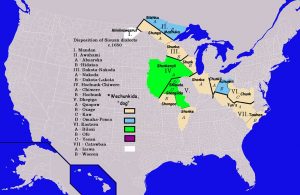
*Wechunkida, dog.All of the words for ‘dog’, except for Mandan /Miiniinsweerut/, share the common central element that became the *-chunkii-. The ones colored blue show evidence of something preceding this, probably *We-: Ofo /Achunkii/, Hidatsa /Mashuka/, Crow /Biishka/.
The ones colored green show evidence of something following this, probably *-da: Omaha /Shiinuda/, Kaw /Shongiida/, Chiwere /Shunkenyii/. However, this *-da is less certain, because there may have been some confusion with the word for ‘horse’. Natives were of course unfamiliar with the horse before Europeans, and it seems the Yesan speakers, as with the gun, came up with the term for the horse, /Chunk iitan/ or ‘big dog’. (‘Horse’ eventually became /Tsungiiten/ in later Yesan).
In Omaha and Kaw, the situation is reversed: ‘Horse’ in both of these languages is /Shongee/, while their words for ‘dog’ end in –da, and the –da looks cognate with Yesan Iitan (big) as in ‘horse’. Similarly in Chiwere, horse is the shorter word, /Shunge/ alongside /Shunkenyii/ dog.
In Hochak the same word (/Shunk/) means both ‘horse’ and ‘dog’.It is possible that the words for ‘horse’ and ‘dog’ were reversed in Omaha, Kaw and Chiwere after borrowing the term for ‘horse’ from Yesan. The –ida ending does not correspond with ‘large’ in these languages, but it could still be a borrowing from Yesan; though the switch in meaning between ‘horse’ and ‘dog’ lacks a good explanation. If this is the case, the –da ending is foreign to the original word for ‘dog’, and the original Proto-Siouan here should be more like *Wechunkii.
As for the common central element that became *-chunkii-, the eastern CH became SH in most languages, and T in Catawban, but the CH-, as in Yesan, Ofo and Biloxi, is probably oldest. The following vowel is more likely U than O, so the final result for ‘dog’ is *Wechunkida (or *Wechunki).
Rankin traces these words to the PS form *Washunke or *Wishunke, which is in the right ball park. However, he ascribes Woccon /Tawhee/ and Catawban /Tun’s/ instead to Proto-Siouan *Ahtoxka, supposedly meaning ‘fox’.
William Meuse
Proto-Dakotan Swadesh word #48
*Onpeedya, louse.Six languages share the same term for ‘louse’, /Hee/, showing the stressed syllable; in two more it is /Heeya/, and the remaining terms are /Wee/, /Bee/, /Pee’/, /Epeesyaw/, /Aneedi/ and /Onyii/. These work out to *Onpeedya as shown below.
(My initial reconstruction *Onpeedi was before I discovered that the Woccon form was /Epeesyaw/, which amazingly, fit in perfectly with what I had reconstructed, but swung the balance over toward a –ya ending, rather than an –ii ending. I still like *Onpeedi as ‘louse’, but maybe I just haven’t got used to the –ya yet!)
The Yesan form for ‘louse’ was not recorded. Perhaps it is not an important word to learn, and it seems to be included on the Swadesh list for linguistic comparisons. At any rate, I would guess the Yesan for ‘louse’ to be similar to Ofo and Biloxi, maybe /Oneedi/…
WOCCON /Epeesyaw/ <*Apeedya <*Onpeedya
CATAWBA ?
YESAN ?
OFO /Onyii/<*Oneeyii <*Oneedya <*Onpeedya
BILOXI /Aneedii/<*Oneedya ^
QUAPAW /Hee/<*Heeya <*Heetya <*Peetya <*Onpeedya
OMAHA /Hee/^
KAW /Hee/^
OSAGE /Hee/^
HOCHAK /Hee/^
CHIWERE /Hee/^
MANDAN /Pee’/<*Peet <*Peetya ^
DAKOTA /Heeya/ ^
NAKODA /Heeya/^
HIDATSA /Wee/<*Bee <*Pee <*Peet ^
CROW /Bee/^Rankin mentions all of these words, except for Woccon, but traces them back to his PS *Wahe.
William Meuse
Attachments:
You must be logged in to view attached files. -
AuthorPosts


- You must be logged in to reply to this topic.
