
- This topic has 7 voices and 59 replies.
-
AuthorPosts
-
April 28, 2008 at 10:34 am #31126
http://www.rootsweb.ancestry.com/~nwa/collins.html
That person is looking for info on some NC collins that was native american. Abijah Collins Hyde County, North Carolina
April 28, 2008 at 10:34 am #31127This collins group is more than likely grouped with the one from Somerset place….this is a family tree of some of the Bertie collins family going into GA. This family is descended from the Bunch family (Jeremiah BUNCH and Henry BUNCH)
http://home.earthlink.net/~ngmann/Gilstrap/collins.html
and here is more info on the Somerset plantation history and the Collins that lived there. http://www.ncmuseumofhistory.org/collateral/articles/s94.women.somerset.place.pdf
It may be possible this is the line my Mom’s mom is from but i don’t know.
April 28, 2008 at 10:34 am #31128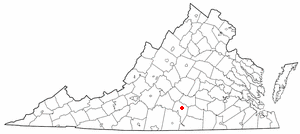 The red dot shows where the first recorded Saponi Village was met. Charlotte Court House, Va 1670 John Lederer. Known as Sapon town,
Also he found another town “Pintahae town” (both Staunton River). The 2nd town was probally the Nahyssan indian town (which is found in a map living right next to Saponi near Louisa county).
1671 Thomas batts went thru this same village stateing they was still there…along with a 2nd Saponi village found here in Cambell county Va.
 April 28, 2008 at 10:34 am #31129
1675 the Nahyssan settled on an island below the Occaneechi at the junction of the Staunton and Dan Rivers.
1676 they are attacked in what was called Bacon’s rebellion aka Virginia’s rebellion. Nathaniel Bacon was demanding a aggressive native american policy. The year before in July 1675 the doeg tribe had raided the plantation of Thomas Mathews near potomac river Virginia.
This caused some Virginians to enter Maryland and attack the Susquehannock tribe.
Bacon overthrew the Va governor and promised to kill of the Susquehannock..however attacked the friendly Occaneechi and the Saponi.
April 28, 2008 at 10:34 am #31130After taking a hard beating in 1676…the Saponi, tutelo, and Occaneechi moved to clarksville, Va along the Dan and Staunton rivers to settle 3 islands. Clarksville is in Mecklenburg county.
(The Occaneechi was on the middle and largest island in Roanoke River, just below the confluence of the Staunton and the Dan, near the site of Clarksville, Mecklenburg County, Va and the Saponi and Tutelo settled on neighboring islands….I believe the Occaneechi was already on the middle and largest islands when the Tutelo and Saponi showed up).

1767 the Conestoga sought refuge among them and were hospitably received, but, attempting to dispossess their benefactors, they were driven away. This tribe was escaping a war with the Iroquis in Pennsylviania….which may be the reason the Iroquis later attacked the Occaneechi, Saponi, and tutelo…The Occaneechi later forced the fugetive Conestoga to return where they came.
April 28, 2008 at 10:34 am #311311699 some Huguenots took possession of the land of Mowhemencho. The greater part of the Monacan had been driven away some years before this by Colonel Bornn
Before 1701 all of the Siouan tribes who had settled in this neighborhood moved into North Carolina, and it is thought that the Nahyssan followed the Saponi and Tutelo to the headwaters of the Yadkin and that their subsequent fortunes were identical with those of these two.
1701 This is the year Lawson found the Occaneechi living on the Eno river in Hillsborough Orange county NC (then Granville I believe). Later still they united with the Tutelo and Saponi and followed their fortunes, having, according to Byrd, taken the name of the Saponi
1702 The Monacan continued to camp in their homeland until alittle after 1702 until the finally untied with their cousins the Saponi and Tutelo at Fort Christanna.
1709 The Occaneechi, Shakori, Saponi, Tutelo, and Keyauwee were about 750 in population numbers.
In 1728 Ned Bearskin (a Saponi hunter) was a guide for Colonel william Byrd the 2nd. During william’s survey of the NC/VA border he noted many abandoned corn fields which showed a disturbance among the local tribes there. Probaly a attack by the Notoway or Mehhrrin which was close to this area and also was Iroquis
In 1740 a group of the Saponi and tutelo surrendered to the Iroquis (same language the cherokee, notoway, and Mehherrin spoke) and joined their tribe (this shows a movement north around 1728 and 1740).
This group of Saponi and tutelo was later exiled to Canada (only this group of Saponi and Tutelo though).
April 28, 2008 at 10:34 am #31132Monacan town location.
Massinacack, on the right bank of James River about the mouth of Mohawk Creek, and a mile or more south of Goochland.
Mohemencho, later called Monacan Town, on the south bank of James River and probably covering some of “the level area bordering the stream in the extreme eastern part of the present Powhatan County, between Bernards Creek on the east and Jones Creek on the west.”
Rassawek, at the confluence of the James and Rivanna Rivers and probably “on the right bank of the Rivanna, within the angle formed by the two streams.”
Two other towns are sometimes added but and they afterward appeared as wholly independent tribes, the Saponi and the Tutelo, it is probable that their connection with the Monacan was never very intimate. They seem to have been classed as Monacan largely on the evidence furnished by Smith’s map, in which they appear in the country of the “Monacans” but Smith’s topography, as Bushnell has shown, was very much foreshortened toward the mountains and the Saponi and Tutelo towns were farther away than he supposed. Again, while Massinacack and Mohemencho are specifically referred to as Monacan towns and Smith calls Rassawek “the chief habitation” of the Monacan, there is no such characterization of either of the others.
April 28, 2008 at 10:34 am #31133Recent times: Mr. John H. Reeves, Jr., has removed 20 skeletons from a recently found site on the Staunton river in Halifax county thought to be Saponi. Beads and such was only found with the Children and Mr. Reeves states this is common with the Mycaenians. Skeletons unearthed by
Mr. Reeves on the New River, near Eggleston, showed a similar prac- tice. April 28, 2008 at 10:34 am #31134Ga-Nc Collins wrote:
1702 The Monacan continued to camp in their homeland until alittle after 1702 until the finally untied with their cousins the Saponi and Tutelo at Fort Christanna.
Untied was supposed to say “united” lol I think they united with the Tutelo and Saponi in New york around 1740.
April 28, 2008 at 10:34 am #311351730 many Saponi left Virginia to reside with the Catawbas, were not happy and returned to Virginia in 1733, accompanied by some Cheraws.
1734 Saponi were settled at Buttrum Town, Virginia (in modern Pittsylvania County, near Dan River, close to Rockingham county, North Carolina, called “Goinstown.” Located near Old Upper Saura or Cheraw Town. Saponi in southern Virginia were associated at times with Nottoway and Nansemond (a band sometimes called “Pochick” or “Pochyackee”) 1737 Records of Saponi in Amelia County, Virginia (deed) 1742 11 Saponi men were bought to court and charged with “terrifying one Lawrence Strouther and on suspicion of stealing hogs” (Orange County Register of Deeds 1741-1743) Forest Hazel 1743 Governor Clarence Gooch of Virginia reported to the Colonial Office that the “Saponies and other petty nations associated with them… are retired out of Virginia to the Cattawbas.” They returned to Virginia in 1748. 1745 May 28, 1745 – Louisa Co. VA “Ordered that William Hall, Samuel Collins, Thomas Collins, William Collins, Samuel Bunch, George Gibson, Benjamin Branham, Thomas Gibson, and William Donathan be summoned to appear at the next Court to answer the presentment of the Grand jury this day made against them for concealing tithables within twelve months past.”
…pled not guilty… Steven Pony Hill http://sciway3.net/clark/freemoors/Indian.htm
April 28, 2008 at 10:34 am #311361753-4 Orange County, North Carloina, Governor Dobbs enumerated a settlement of Saponi Indians, 14 men and 14 women, children not counted. This is very near where in 1755 several Melungeon names are in a tax list. 1752 Granville County 1752 on Buffellow [sic] Creek [a branch of the north fork of the Little River] mentions Thomas Wade –Charles Gibson and William Collins… and Deputy Surveryor, W. Churton. 1761 A 1761 report counted 20 Saponi warriors in the area of Granville County, NC and this corresponds to the “Mulatto, Mustee or Indian” taxation in Granville of such families as Anderson, Jeffries, Davis, Chavis, Going, Bass, Harris, Brewer, Bunch, Griffin, Pettiford, Evans, and others in the 1760’s. Steven Pony Hill April 28, 2008 at 10:34 am #31137The earliest known location of the Saponi has been identified by Bushnell (1930) with high probability with “an extensive village site on the banks of the Rivanna, in Albemarle County, directly north of the University of Virginia and about one-half mile up the river from the bridge of the Southern Railway.” This was their location when, if ever, they formed a part of the Monacan Confederacy.
Ok I’m looking at this location on map quest. The location appears to be pretty much the connecting point for Orange county, Louisa county, and Albemerle county.
Here is the address for University of Virginia…..580 Massie Road Charlottesville, VA 22903. That just happens to be about the end of “Saponi trail”.
April 28, 2008 at 10:34 am #31139What makes this river unique is its dual personality – it has two names. At both ends it is the Roanoke, but in the middle it is the Staunton. On some maps it is marked as the Roanoke from one end to the other. However, that part of it which flows through South Central Virginia is known locally and on most maps as the Staunton (pronounced Stanton) from the mouth of Back Creek to its confluence with the Dan.
I’m following this entire river looking for islands.. I’ve found some…..I’m going to post links to the photos I am taking of the arial maps…I think I have found Tutelo island, Saponi Island and Occaneechi island. I’ve also went all over the other place the Saponi was and I’m sure I’ve located where they was there…however there is 6 possible places.
April 28, 2008 at 10:34 am #31146Here is a link to a map that show “where the Saponi were in 1640,” prior to Ft. Christanna.
Good map, although incomplete. Am guessing that may have something to do with it being from 1640. At that time, there were only about 10 counties in VA. Best I can tell, the Pittsylvania/Henry/PAtrick Co area Saponi, Saura, Cherokee, etc., would have been in part of Charles City County. ?
April 28, 2008 at 10:34 am #31149SORRY I JUST SAW YOUR QUESTION ABOUT THE OLDFIELDS SCHOOL.THE REV. DRURY DOBBINS FOR CERTAIN SO I ASSUME HIS SIBLINGS ALSO ATTENDED A OLDFIELD SCHOOL.I DO NOT KNOW WHERE THE SCHOOL WAS LOCATED BUT THEY WERE GENERALLY SCHOOLS FOR NATIVE AMERICAN CHILDREN.ON ONE OF THE INDIAN ENROLLMENTS I HAVE FOR NANCY DOBBINS IT SAYS HER GGGRANDFATHER WAS RAISED WITH AND CLAIMED THE INDIAN WHEN HIS FAMILY LIVED IN VA.BUT ANY WAY OLDFIELD IS A CHEROKEE WORD.YOU CAN SEE IT IN THE BIO. WRITTEN ON REV. DRURY THE ONE WITH HIS SERMONS IN THE BACK OF THE BOOK.
THANKS,LISA DOBBINS
Am wondering what the source was for that info?
Only Oldfields School I can find is a boarding school in MD, for girls. There is, however, and Old Fields township in NC.
That “Oldfields” is a Cherokee word is not true. It is obviously an English word.
-
AuthorPosts


- You must be logged in to reply to this topic.
