- This topic has 16 voices and 56 replies.
-
AuthorPosts
-
November 8, 2005 at 4:14 pm #37502
According to early written Westmoreland County history, it was one of four counties involved in the Whiskey Rebellion, although least so of the four. Going back further in the county history there is a lot regarding local Tribes and Nations from the 1750s to 1790s. The history is much more complicated than I realized.
There were a lot of different groups; villages composed of single Tribes, villages composed of multi-Tribal remnants, mixed-bloods, backwoodsmen, confederated Nations of the Haudenosaunee (mostly in NY, stretching into PA), Quaker-led Pennsylvania Dutch whose policy was to purchase land before settling, aggressive Scots-Irish settlers who started clearing Tribal hunting grounds disregarding PA policy, French English & American interests stirring the pot, much war.
I checked everything I could find on my ancestor George Drybread. There is one source listing his birth in Westmoreland PA 14 Jul 1753 – his tombstone. Still seems like a stretch to me though. This is the very beginning of Early Westmoreland History. George Washington (21 years old) was scouting the area at this time. A Block House was built near present day Brownsville in 1753. The French didn’t build Fort Duquesne until 1754, and Fort Pitt wasn’t finished until 1761. His marriage to Susannah Sager in 1775 is sourced as being in Lancaster PA.
He was definitely there by 1786, as he shows up on the PA Tax & Exoneration Lists then and again in 1787 and 1789. He was in the Northwest Territory by 1799. His children born before 1786 are listed as born in PA, but no more detail. Can find no record whatsoever of his mother, and his father is listed as Andreas/Andrew or Frederick Druckenbrod. There is no proof of this I have found, and some say Andreas and Frederick are the same person. If his father was Andreas, George would been in born in Germany and come over at 14 years old on the ship ‘Chance’ in 1767.
After reading 100+ pages of Westmoreland history this passage clearly reflects the Drybread line:
November 8, 2005 at 4:14 pm #37503The Germans in Western Pennsylvania did not generally come from Germany, but rather from Berks, Lancaster, Cumberland, Philadelphia, and other eastern counties. Their ancestors, however, had come from the banks of the Rhine, from Alsace and Loraine, from the Netherlands, or Holland. They were called Pennsylvania Dutch, and spoke a language that was a mixture of German and English, with now and then a word or an expression engrafted from other European tongues. It very greatly resembled pure German, so much so that a German scholar can converse readily with a Pennsylvania Dutchman, while the latter has even today no trouble whatever in making himself understood in Germany. This language was even in its best days, almost entirely a colloquial dialect, and consequently has declined very rapidly in the last fifty years.
There were Pennsylvania Dutch scattered all over Westmoreland county, but they settled mostly in Hempfield and Huntingdon townships. There were also a great many on the Chestnut Ridge bordering Somerset county, where they were very numerous. They lived isolated lives compared with the Scotch-Irish, and the township of Hempfield and Huntingdon as well, have in a great measure retained their Dutch characteristics even to our day. They never went abroad to seek public preferment or office. They were almost exclusively farmers, and they were good farmers, too, with apparently little ambition to engage in other industries. They were sober, industrious, economical, unprogressive and honest. The early settlers of this race believed in ghosts, haunted houses, signs, etc., more than their neighbors of other extraction did. Many of them even yet plant their crops, kill their live stock, cut their grass, roof their houses, build fences ,etc., in certain signs which they learned from their ancestors.
In the early years many of them had horseshoes nailed above their doors to keep away the witches. They burnt brimstone in the coop to keep the witches form bewitching the chickens. Many fond mother taught her children that as long as they wore the breastbone of a chicken tried around their necks with a string, they would not take whooping cough. They made tea from the dried lung of a fox to cure consumption. The rattles of a snake killed without biting itself would not only cure headache but would ward off sunstroke as well. So it was that long long years after the last Indian had been driven to the Mississippi valley, they imagined that they heard warwhoops of savages on dismal evenings, and the music of fife and drums, once so common at forts and stockades, often came back to dispel the Indian spirits which nightly hovered around their former hunting grounds. Many believed that children with certain ailments could be cured by putting them three times through a horse collar. So a felon could be cured by a child which in its youth had strangled a groundmole by holding it above its head. This peculiar ability remained with the child even to aged manhood. Diseases of horses were cured by words and charms, and water was discovered by the twigs of trees held in certain positions. Many believed that immense treasures were buried in the ground. This was generally English gold, and more than one field has been dug over in fruitless searches for the rich mineral.
But is can scarcely be said that they were ignorantly superstitious, or superstitious greatly beyond the age in which they lived. It must be remembered that Blackstone, the greatest of English law commentators, believed in witchcraft, etc. He says, Book 4, Chapt. 4, Sec. 6: “To deny the possibility, nay actual existence of witchcraft and sorcery, is at once flatly to contradict the revealed word of God in various passages both of the Old and New Testaments; and the thing itself is a truth to which every nation in the world hath in its turn borne testimony, either by examples seemingly well attested or by prohibitory laws; which at least supposes the possibility of commerce with evil spirits. The civil law punishes with death not only the sorcerers themselves, but also those who consult them imitating in the former the express law of God, �Thou shalt not suffer a witch to live,� and our laws both before and since the Conquest have been equally penal; ranking this crime in the same class with heresy and condemning both to the flames.”
There were some old Dutch cures that though seemingly foolish, may have cured the patient. To illustrate; they believed that a horse could be cured of sweeny, which is an atrophy of the muscles, by taking a ½round stone from the bottom of a creek and rubbing the sweenied parts for fifteen minutes before breakfast. This cure, foolish as it may seem, had in it all the essentials of the most modern methods of the massage treatment, and doubtless cured many a suffering horse. So, too, erysipelas, a feverish skin disease with painful swelling, could be cured by taking the blood of a black rooster killed before sun-rise and covering the diseased parts thoroughly with it. Now the blood of the rooster when dried formed a covering which kept the air from it, and doubtless in many instances effected a cure. The skillful modern surgeon would apply collodion, which would effect a cure in the same way.
But very early they established churches and Sunday schools. They had preachers from Germany or men educated in the German language and this is one reason why the Pennsylvania Dutch language has lasted as long as it has. In religion the most intelligent of them were largely Lutherans or German Reformed. There were Mennonites or Mennonists, who were followers of Simon Menno, born in 1496. There were also many Dunkards and Omish. These three branches were nearly the same in religious beliefs and they were all extremely superstitious. They rejected infant baptism, would not be sworn in court nor perform military duty. They are remembered now mostly from their peculiar dress and from their public feet washing as a religious ceremony. The shrill whistle of the locomotive was the death knell to many of these superstitions. Neither the Dunkards, Mennonites nor the Omish have held their own with the march of education and improvement. The common school system wherein the text books and teachers were almost exclusively English, has well nigh obliterated the Pennsylvania Dutch language.
Nor must it be supposed that these people, ignorant and superstitious as they were, were inferior in native intellect or morality. For their day, they acquired large estates and lived comfortably. At the time of which we write, they were within the limits of Bedford county, too far from the seat of justice to redress their grievances by going to law. They had therefore an unwritten law among themselves which in effect worked out the spirit of all law as defined by Justinian, the Great Roman law giver, viz.: “To live honestly, hurt nobody, and render to every one his due.” One in that community who habitually violated this precept, was very soon ostracised from the society of his neighbors; the ordinary field hand would not work for or associate with him. He was not invited to the barn raising or log rollings so common then in the sparsely settled country, and this unwritten law of social ostracism was carried out so thoroughly against the offending dishonest or unworthy neighbor that families thus ostracised have abhorrently left the fields they had cleared with great labor, never to return to them.
These principles of right living were brought with them and thoroughly implanted in the new country, for most of them had been brought up under the English law and knew thoroughly their inherent rights as citizens of a community. The very absence of courts or convenient tribunals before which to redress their grievances, helped them in a great measure, to give a high moral tone to their rural communities in their personal relations with each other.
George Drybread was in Huntingdon township. The entire line down to my grandfather were all skilled farmers. One Drybread ancestor was known for having several diffrent apple and pear varieties grafted to a single tree. My grandfather grew up on the family farm, but moved to Indianapolis later after the government appropriated their land during WW2.
My grandfather had horseshoes hanging in the house. His father spoke German, and so did my uncles. My Drybreads were not Quakers, but some cousins seem to have been. This whole line were very self-sufficient people, who had no problem living “isolated lives” as the history calls it. “Superstitious” and “principles of right-living” definitely apply to the Drybreads. It’s hard to describe exactly what it is that this history describes as “superstitious”. To me it’s more like a connection to old stories – like the folklore recorded by the Brothers Grimm – cultural researchers from the same era.
November 8, 2005 at 4:14 pm #37504Boy, I will have to look for him as I look into William Ralston and Gideon Walker. William’s son was born in Greensburg, and Gideon lived in Brownsville, right next to Redstone Old Fort. Here are a couple of resources. Not sure if your guy is related, but the coincidence of your Drybread and my Walker in Brownsville and then moving to Bardstown is too great for there not be a connection of some sort. Our DNA does not indicate a close relationship if even there is one, considering the Potters, but there has to be a connection of some sort. What year do you think your Drybread left? Our Walker sells his land in 1793. I will add additional resources as I find them. I have the 1783 petition. I will upload when I have time, four or more pages of signatures.
Techteach
November 8, 2005 at 4:14 pm #37505I can’t pin down exact dates with the sources I have found so far. There is conflicting information. PA Tax and Exoneration lists show George Drybread in PA in 1789. Yet genealogy shows his middle six children with Susannah(Susan) Sager/Seiger born in KY between 1787 and 1797. The first four children are listed as born in PA 1777-1784. My direct ancestor William Drybread is born in present-day Dearborn Co IN in 1799, and the last two children born 1802 & 1804 in Butler Co OH.
The known surnames this group of 13 Drybread children marry into are: Kendall, Vantreese, Wilkins, Ball, Millholland, Iseminger, Brown, Beeler, Jones, Lewis, Charlton, and Hopkins.
Not sure this is relevant here but… Another name of yours I am seeing on a line of DNA cousins with a common (suspected Saponi) segment is Van Swearingen – Lurranah Van Swearingen 15 Oct 1713 MD – bef 1805 Burke NC – who married Edward Teague. Their son Vandever Swearingen Teague passed abt 1810 in KY.
November 8, 2005 at 4:14 pm #37507Do you mean DNA segment?
I potentially have 2 Swearingens, but the evidence is shaky.
Techteach
November 8, 2005 at 4:14 pm #37509techteach;38275 wrote: Do you mean DNA segment?
I potentially have 2 Swearingens, but the evidence is shaky.
Yes DNA segment. There are some segments I have found that are common to my family and half a dozen or so others where everyone in the group has names/dates that show up in SaponiTown forums. The one I’m referencing here is estimated at 4-5 generations out – on the order of 30cM. Yet I cannot find common ancestors between these well-documented trees.
The Swearingen stuck out to me because I had seen you mention it before. But don’t think it is related specifically to this thread.
November 8, 2005 at 4:14 pm #37511I have seen it as an indigenous last name.
I have not found time (or money!) to really study segments. I downloaded Genome Mate and have some of the segments identified, mostly those of the lines that are rumored to be native. This week, I followed directions in a blog to use Gedmatch’s chromosome painting to use these segments and compare the ethnicity of matching chromosome segments.
I just wish I had more time to study it.
Techteach
November 8, 2005 at 4:14 pm #37662I have recently found some of my Selby family were cast out of a Quaker community for some reason I’m not sure about. This family seems to be Scottish + ancestry. This may be about the time they came West to MO area Late 1700’s early 1800’s. Time frame unknown… Bob
November 8, 2005 at 4:14 pm #37664I have found matches but I am trying to verify and connect people before I post. Just wanted all to know that I am still here. LOL. Some are to the Watts and Jeffries but there is also another larger group that I want to see if I can find a common area or grandparent.
November 8, 2005 at 4:14 pm #37669It seems to me that the Quaker-Blackfoot group is a smaller circle within the bigger Saponi-mixed circle. Given enough time, DNA samples, genealogy and oral history you could connect the dots and draw a web linking all the living descendants.
It struck me after learning we are direct descendants of Quaker martyr Mary Dyer 1611-1660, how many Dyer internments there are in the Blackfoot Cemetery in Pike Co Indiana. The oldest picture I have on this line is Almon Marshall 1858-1939 of Johnson Co Indiana. There are also many Almon (lastname) internments. Maybe it is not connected, but first, middle and nick names seem to have significance on these lines. Almon is 4xg-grandson to Mary Dyer on his mother, Melvilla Cotton’s line.
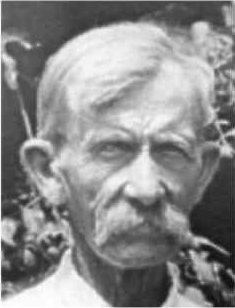
Melvilla’s father Henry Smith Cotton b.1763 Virgina Colony, d.1831 Bardstown Kentucky, is the Dyer descendant. It seems his line could have been mixed already. If it wasn’t it almost certainly was Henry Smith Cotton married Mary Harrell b.1765 Bertie NC, d.1827 Whyte VA. And t definitely was when Almon C Marshall married Mary Coppock.
Mary Coppock 1859-1945 is daughter to Nathan Coppock and Zillah Bailey.
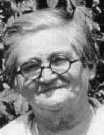
Nathan Augustus Coppock Jr b.1835 Miami OH, d.1895 Indianapolis IN was third cousin to Barclay and Edwin Coppock. Quaker abolitionists who joined John Brown’s attack on Harper’s Ferry. Edwin Coppock 1835-1859 was hanged with John Brown in Charleston VA. Barclay Coppock escaped via the Underground Railroad to Canada. I suspect my direct ancestors were involved in operating or supporting Underground Railroad stops. Barclay Coppock 1839-1861 was killed in the Platte River Railroad Tragedy. Confederate bushwackers burned the lower supports of the bridge in Missouri. When the night passenger train of men, women and children hit the bridge it collapsed, flipping the locomotive 30 feet into shallow water, killing 20 and injuring 100.
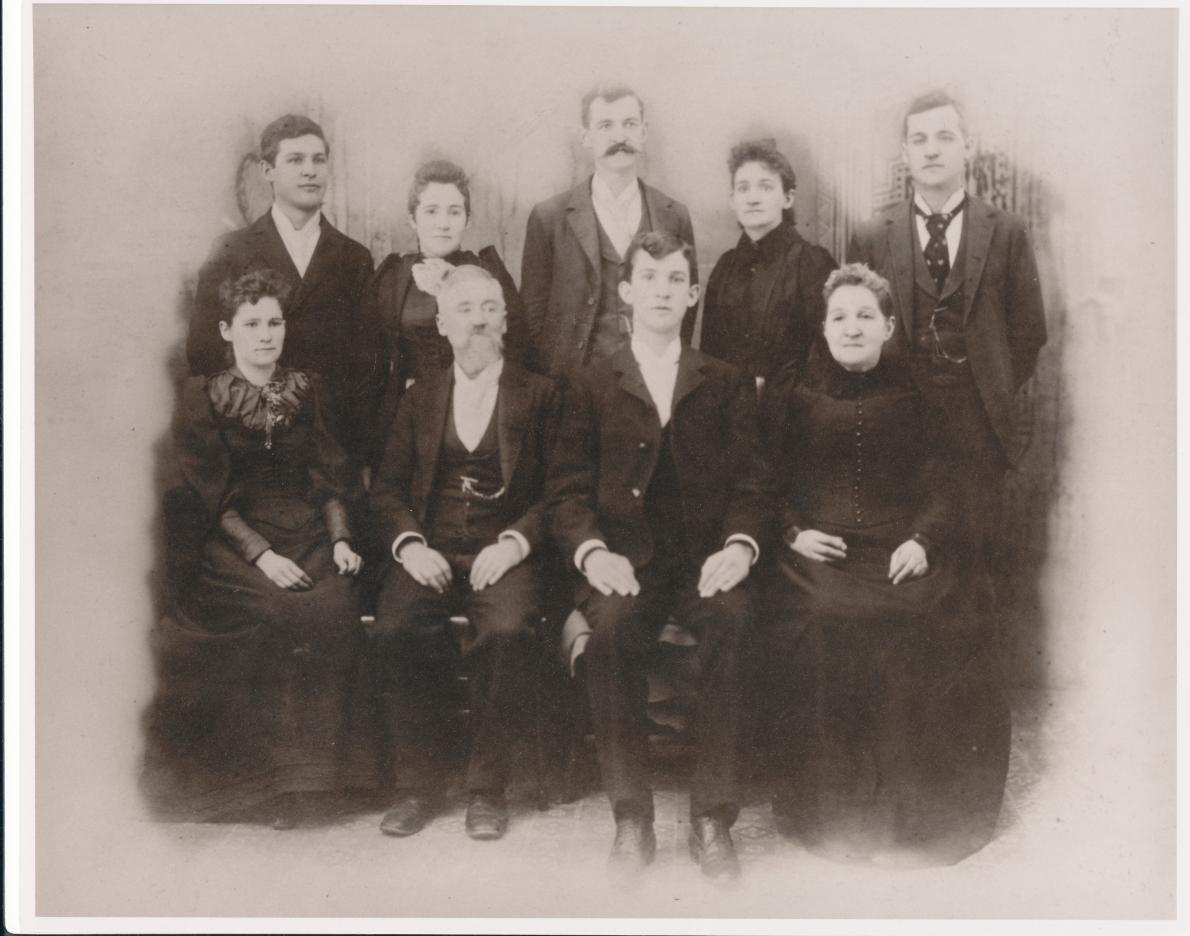 Mary Coppock is second in the top row, Nathan A Coppock is second bottom row. Zillah Bayley is fourth in the bottom row. Her ancestry is mixed and is the line I have found the most relatives on via SaponiTown and other Saponi sites.
These were my grandfather’s mother, Maude Marshall’s ancestors.
On my grandmother’s side is the Indiana Jones-Smith ancestors. This line are first cousins to William Penn through Smith-Good-Redfern-Routh ancestors. All the grandparents of my grandmother’s grandfather Dora M.C.S. Smith seem to be mixed. The generation after that is likely full-blood ancestor(s), Buck/Brower. I was looking at the Cayuga Nation website and noticed the William Penn wampum belt.
This belt was gifted by the Lenape to Penn under an elm tree at Shackamaxon in 1682 to commemorate peace, love and amity between the Quakers and the Lenape. The belt was held in the Penn family until 1857 when descendant Granville Penn gifted it to the city of Philadelphia in a ceremony.
I’ve said some of this before, but putting it all together reinforces it for me. The links seem very clear to me.
November 8, 2005 at 4:14 pm #37671cherosage;38456 wrote: I have recently found some of my Selby family were cast out of a Quaker community for some reason I’m not sure about. This family seems to be Scottish + ancestry. This may be about the time they came West to MO area Late 1700’s early 1800’s. Time frame unknown… Bob
One of the main reasons for being cast out of the Quaker community is “marrying out of unity”. Which usually means marrying someone of a different faith. This started to cause big losses in Quaker numbers after 1740. “Marrying contrary to discipline” is another common notation – for marrying outside a Quaker meeting.
There are other reasons for being cast out as well. It certainly happened to some of my ancestors. Even though a great many of my ancestors were Quakers, neither my mother, her parents, or grandparents were Quakers as far as I know. I think I’m the first generation in some time to go to Quaker meetings. Although I attend the Ottawa Monthly Meeting I am not officially a member of the Quakers. More often I go to Quaker sponsored events. The Canadian Friends Service Committee is focused primarily on right relations with First Nations in Canada. I came to find that Quakers here in Ottawa are focused on many of the same things I was already focused on before I became more aware of the community.
November 8, 2005 at 4:14 pm #37680MarcSnelling;38248 wrote: Other surnames of the ancestors of my 1787 Bardstown Harrell-Cotton marriage are; Smith, Padgett, Wimberley, Barbee, Hyde, Clator, Overall, Pearce, Vaughter, Jones, Baldridge, Noel, Hodgson, Elliot, Page, Allen, Miller, Gaines, Christopher, Beaumont, Leath, Temple, and Cook.
Any Beaumonts in Litchfield or New London counties of CT?
-
AuthorPosts




- You must be logged in to reply to this topic.
